The Durango & Silverton Narrow Gauge Railroad is one of Colorado’s most iconic attractions, carrying passengers through the spectacular San Juan Mountains on a route that has been in continuous operation since 1882. Originally built by the Denver & Rio Grande Railway to haul gold and silver ore from the mining town of Silverton, the three-foot narrow-gauge line quickly gained a reputation for its breathtaking scenery. Today, the railroad is a National Historic Landmark and preserves the romance of the steam era with meticulously restored locomotives and historic passenger cars.
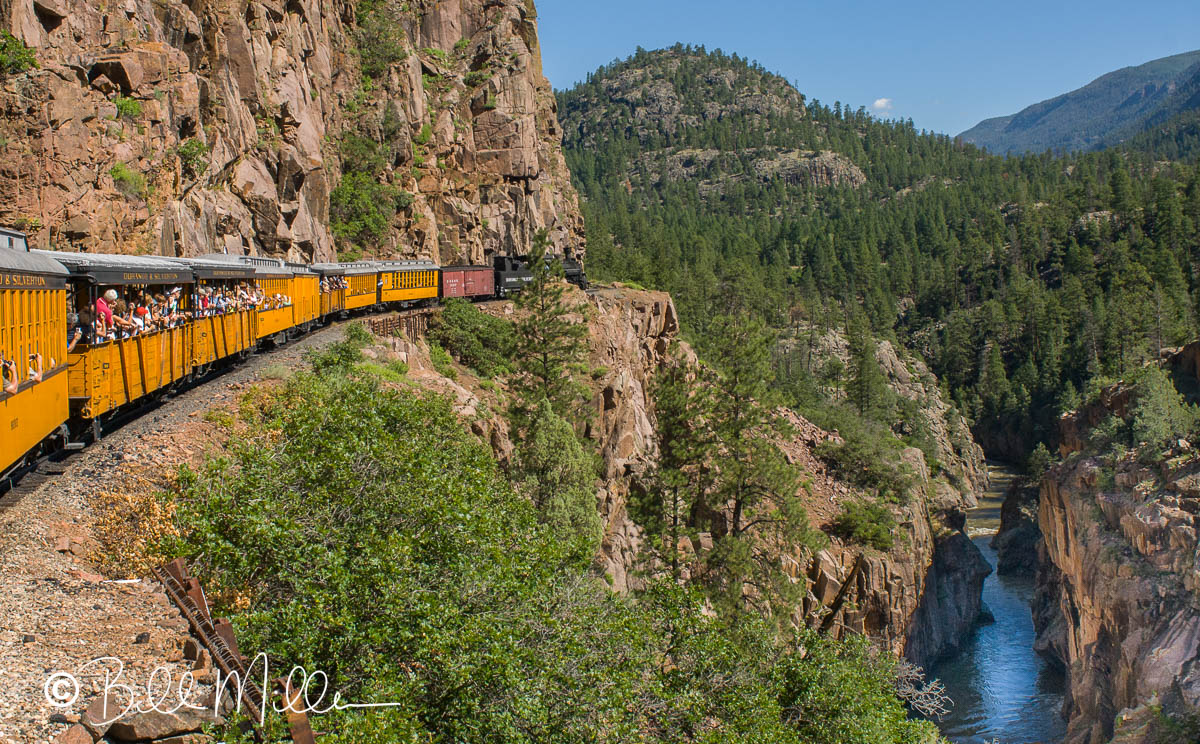
Durango & Silverton Narrow Gauge Railroad
Summer ride. I remember my first ride was when I was 9 years old on a summer vacation to Colorado with Mom and Dad. This trip with Sandy was almost 50 years later.
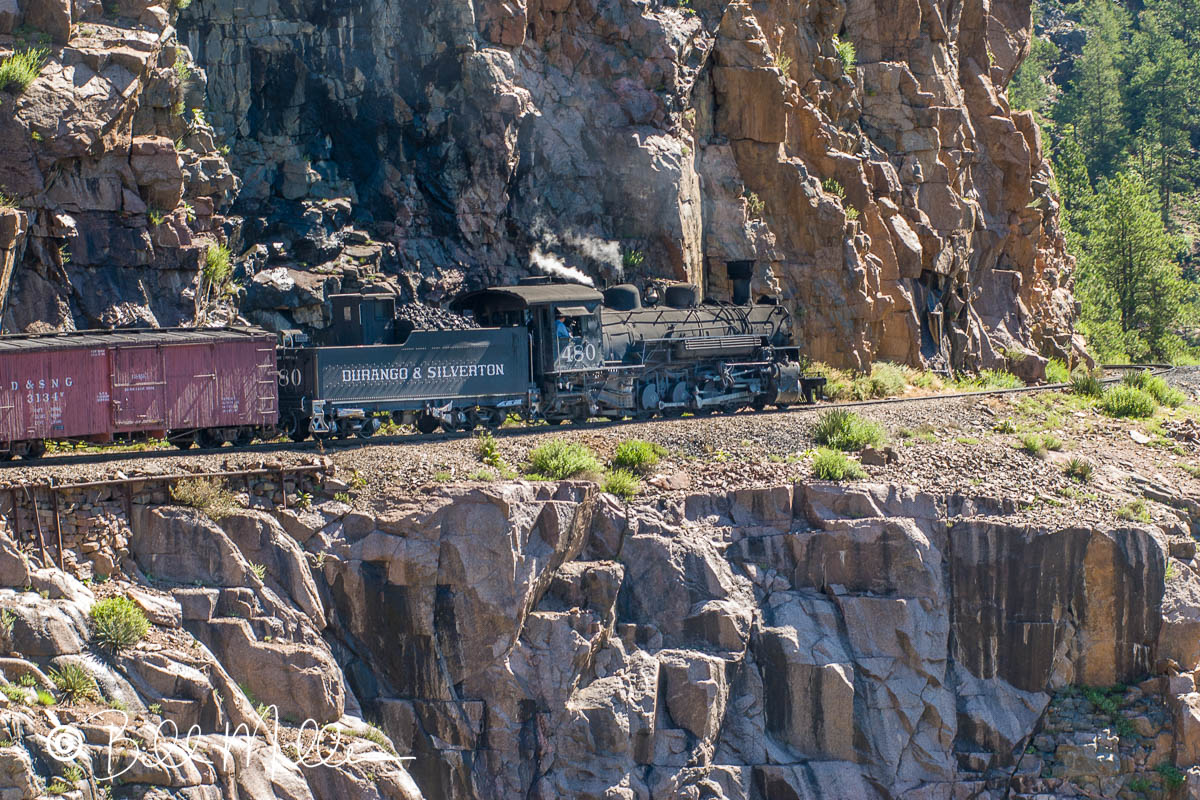
Narrow Gauge
Standard railroad tracks in the United States are 4 feet 8½ inches wide, while the Durango & Silverton line uses rails that are just 3 feet apart. The narrower track made it possible for the trains to negotiate tighter mountain turns.
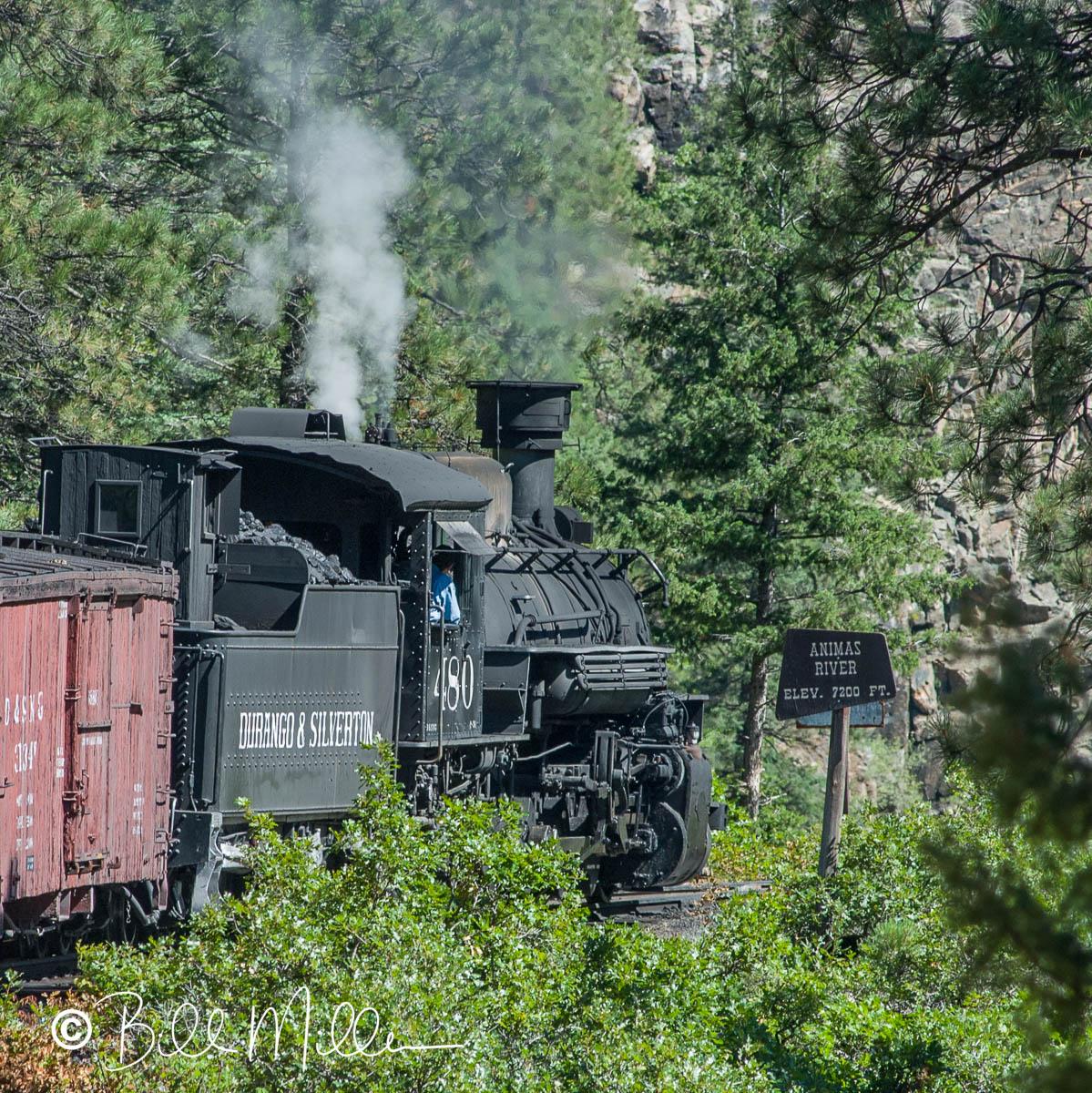
About to Cross the Animas
The train follows the Animas River as it twists through narrow canyons of the San Juan Mountains.
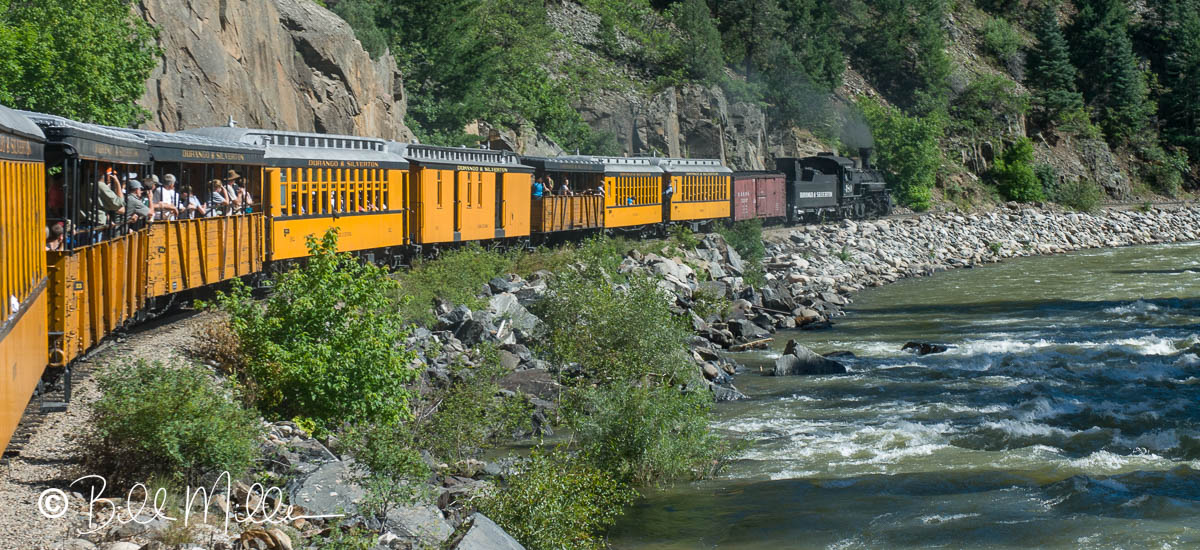
A Steady Climb
During its 45-mile journey to Silverton, the historic steam train climbs nearly 3,000 feet from Durango. The journey through the San Juan National Forest reveals cool alpine forests, towering peaks, waterfalls, and river rapids.
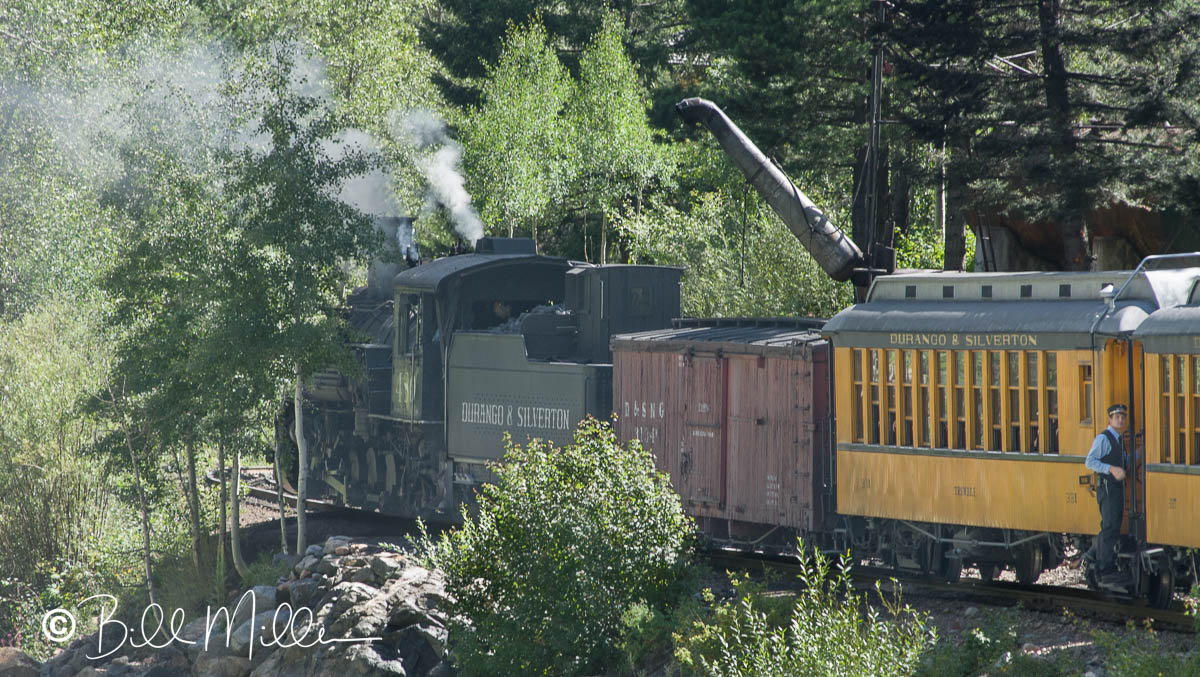
Water Stop
The steam locomotive pauses beside a trackside water tank to replenish its tender, as it consumes thousands of gallons of water on the climb to Silverton. This stop an essential part of the trip just as it was more than a century ago.
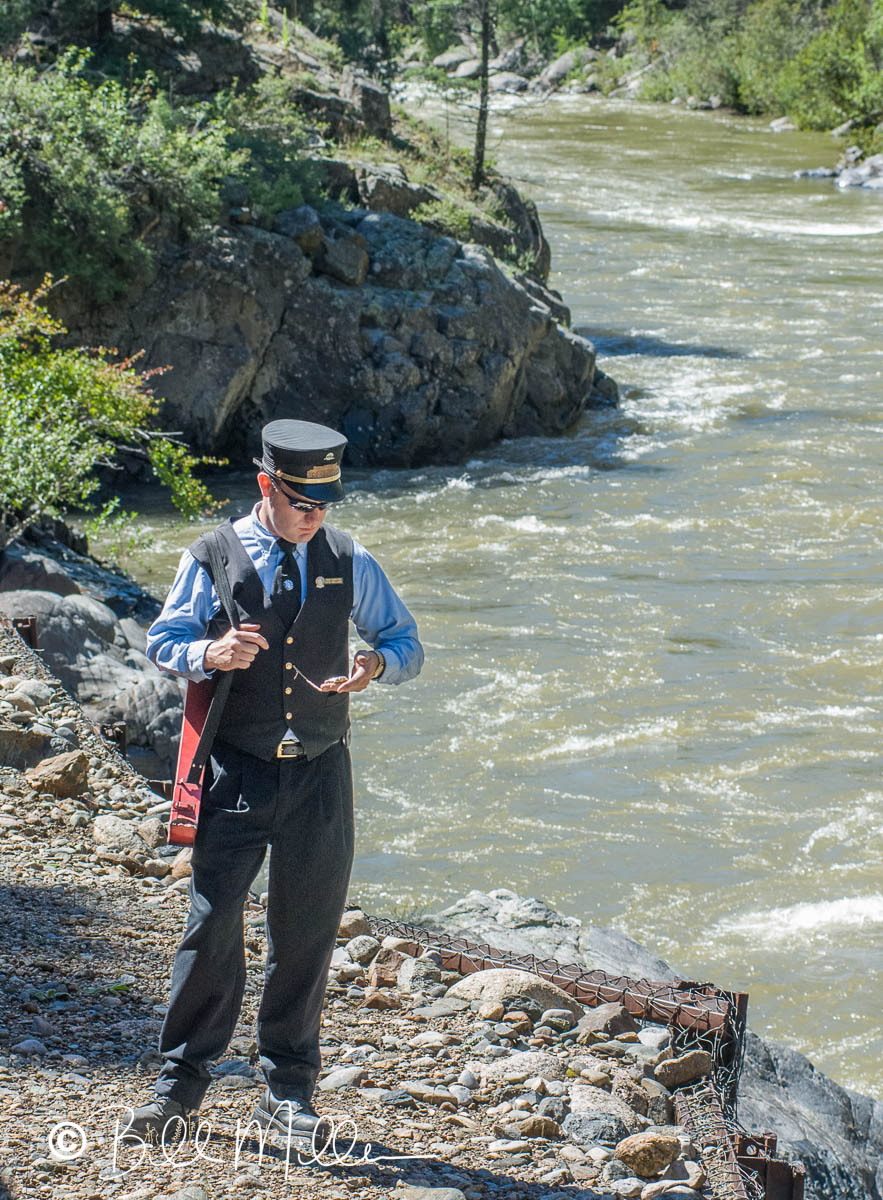
Conductor Checking His Watch
At the water stop pause, the conductor checks to be sure we are on schedule.
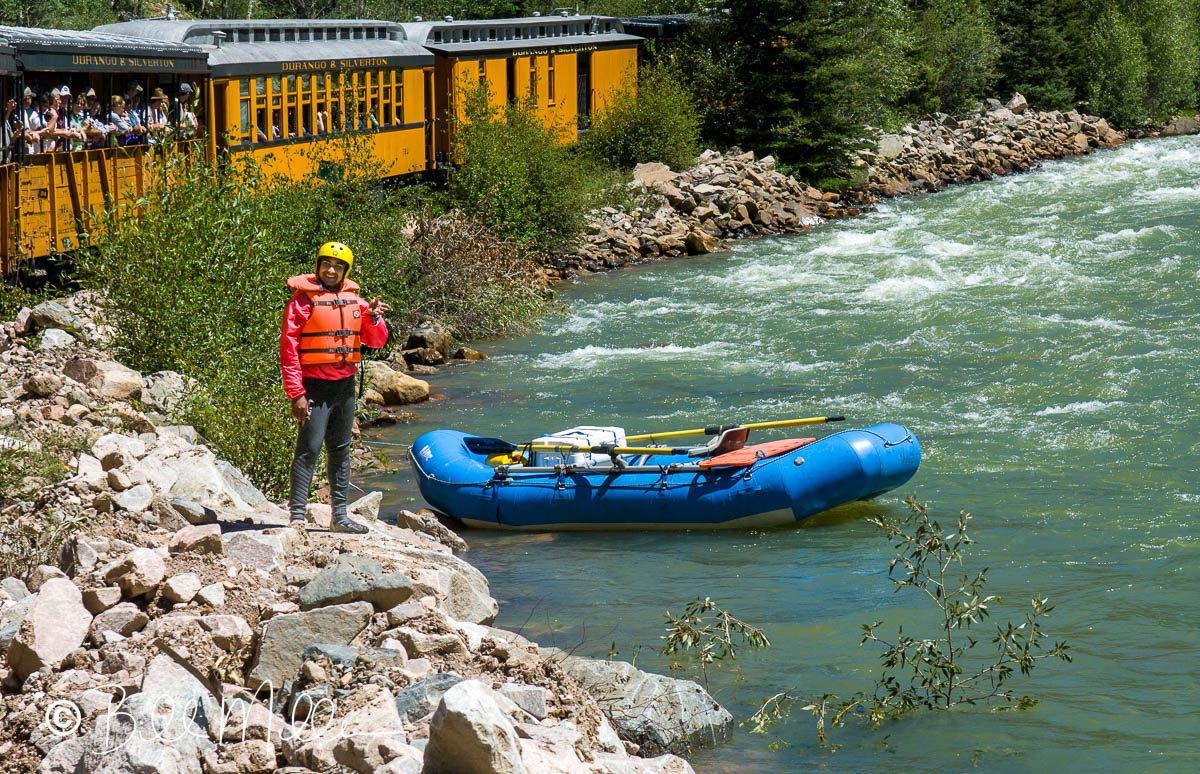
Animas Rapids
The Animas River offers more than spectacular scenery—it is also one of Colorado’s premier destinations for whitewater rafting. As the river descends from the high peaks above Silverton, it tumbles through narrow canyons, over rocky ledges, and around countless bends, creating everything from gentle floating sections to exciting Class III and IV rapids. During the spring and early summer snowmelt, the river comes alive with powerful currents that attract paddlers from around the world.
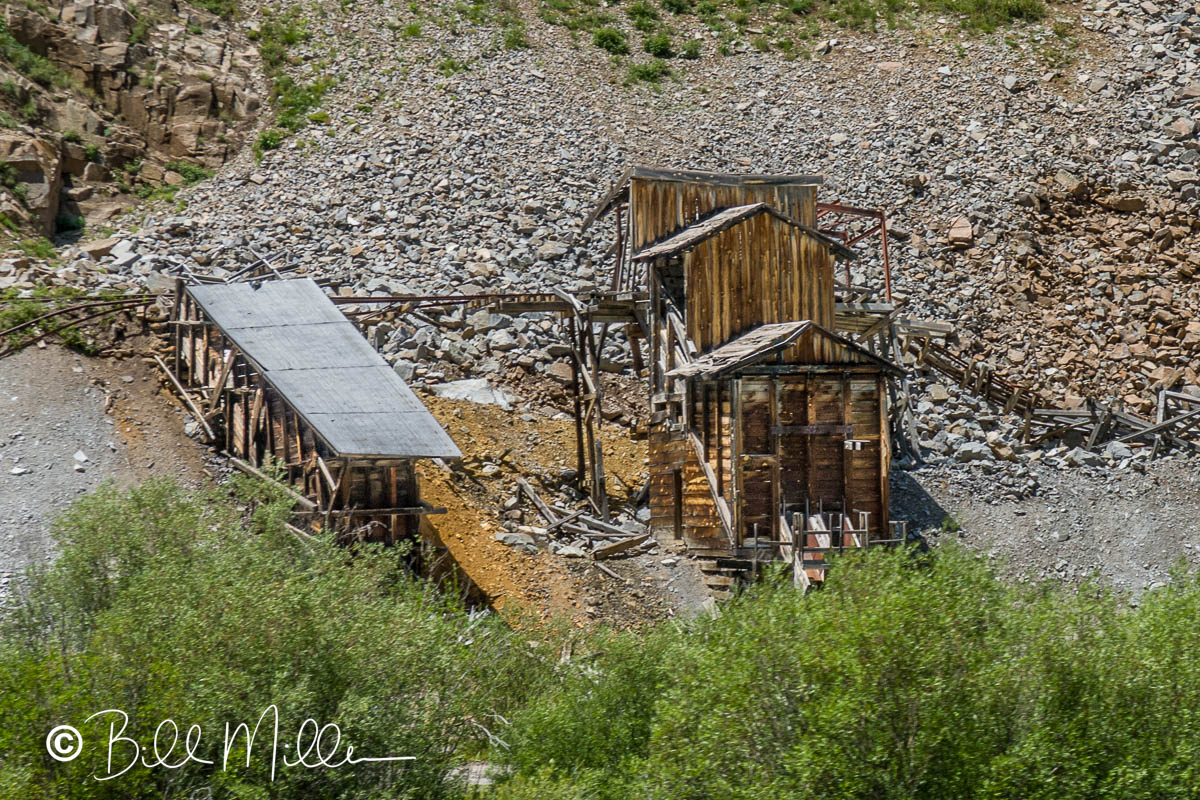
Abandoned Silver Mine
Near Silverton, the evidence of Colorado’s mining heritage becomes apparent. Hundreds of mining claims once dotted the surrounding mountains, and weathered structures remain scattered across the alpine landscape.
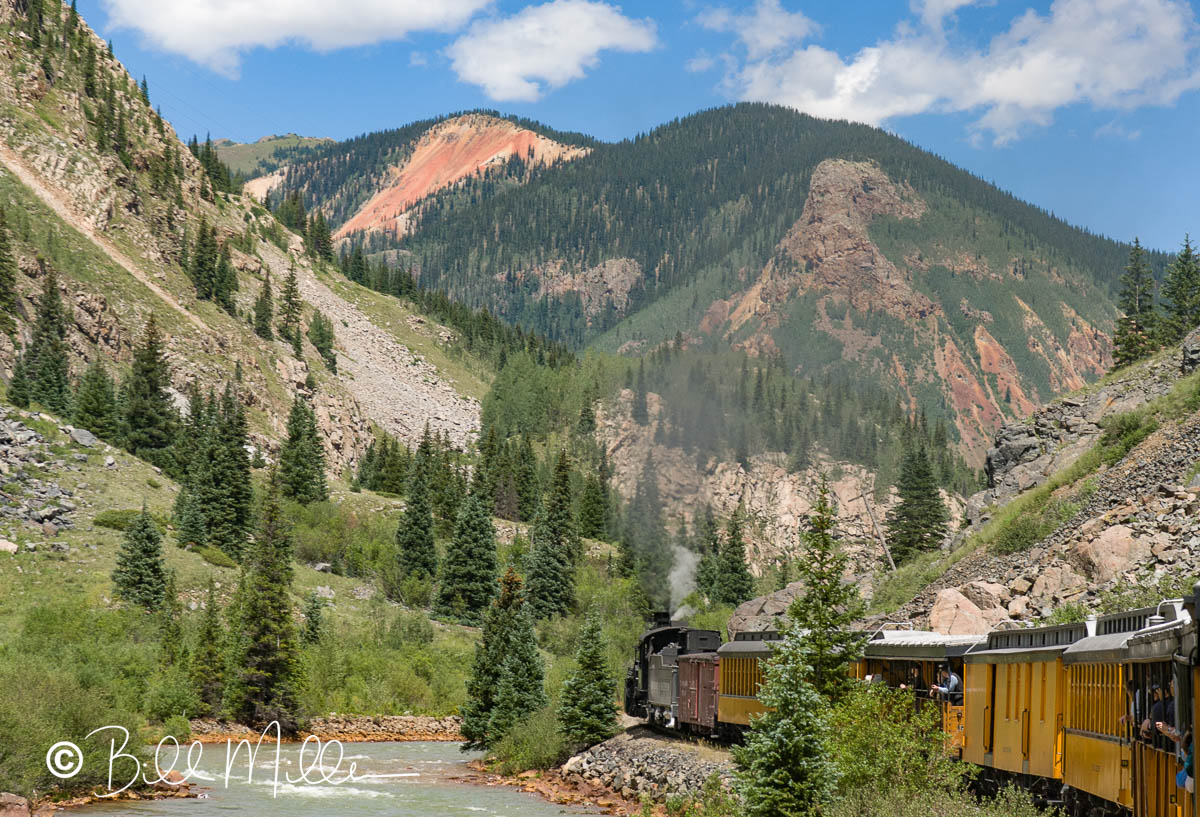
Almost to Silverton
The three and a half hour trip to Silverton passes far too quickly. There is barely enough time to appreciate each and every view.
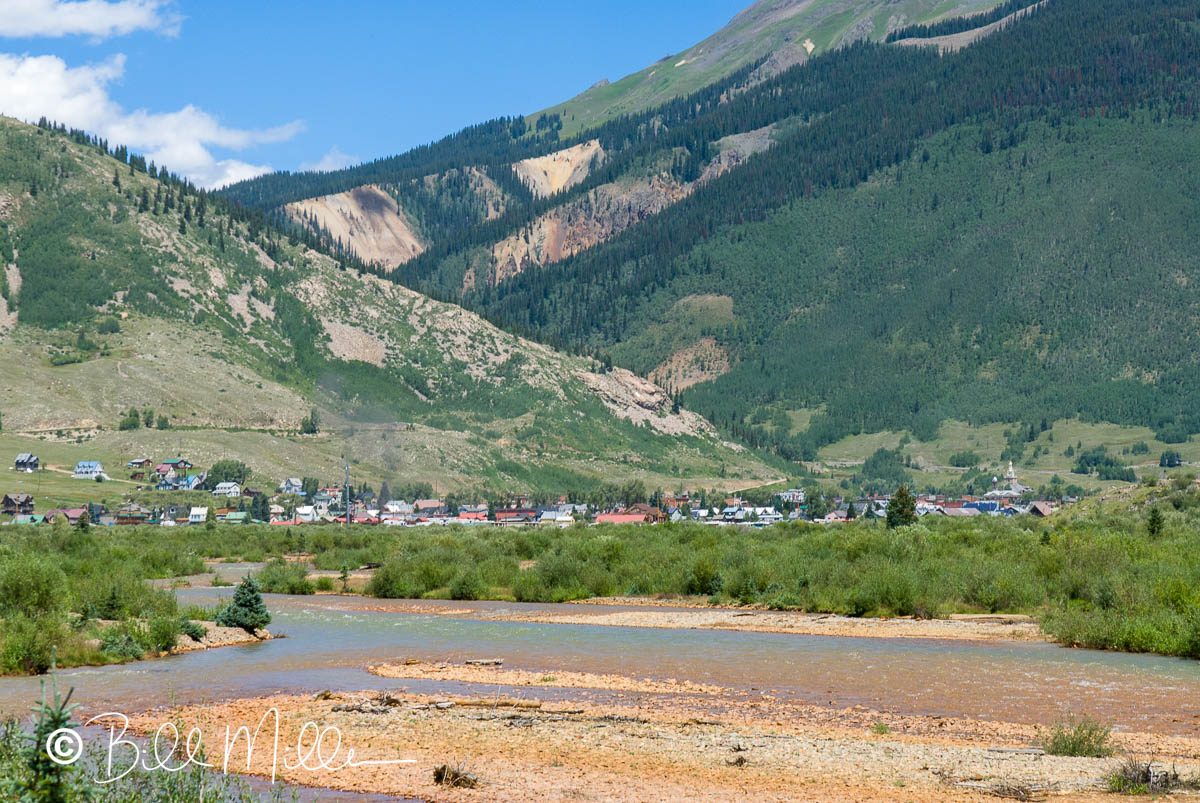
Silverton — Elevation 9,318 feet
Silverton is a remarkably well-preserved mining town that seems frozen in time. Its colorful Victorian buildings, wooden boardwalks, and surrounding peaks offer a glimpse into Colorado’s silver boom of the late 1800s. Passengers usually have about two hours to explore the historic mining town and/or grab lunch before boarding the train for the return trip to Durango
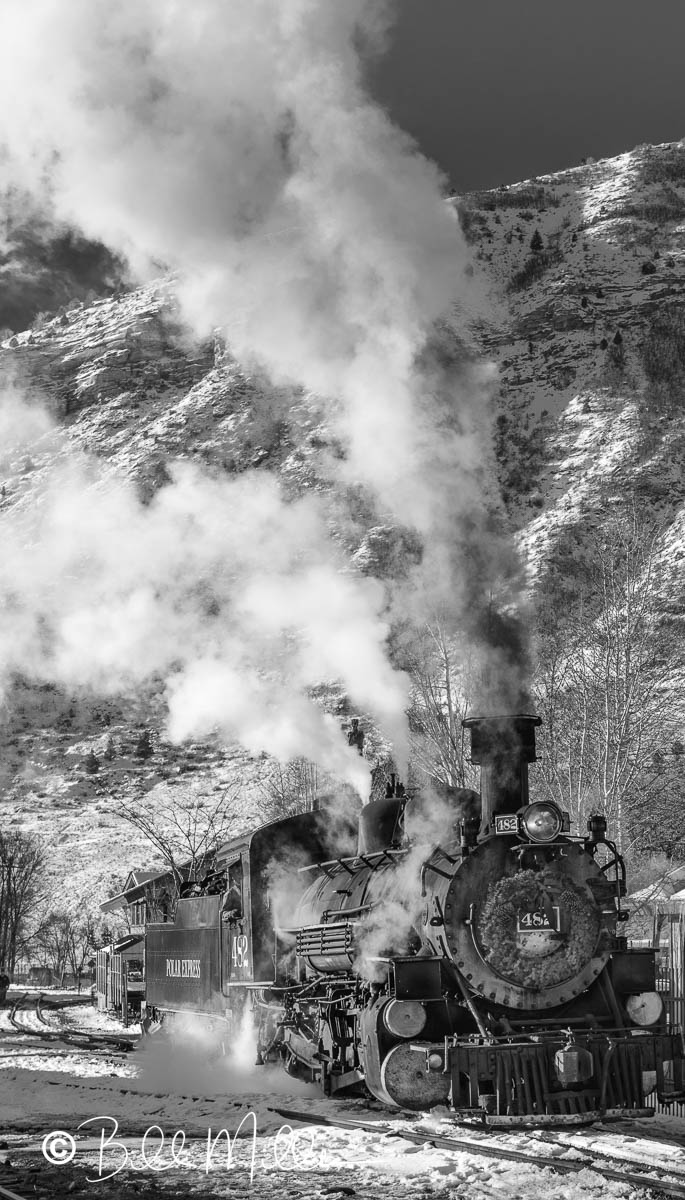
Locomotive #482, “The Polar Express”
The Durango & Silverton Narrow Gauge Railroad winter trip.
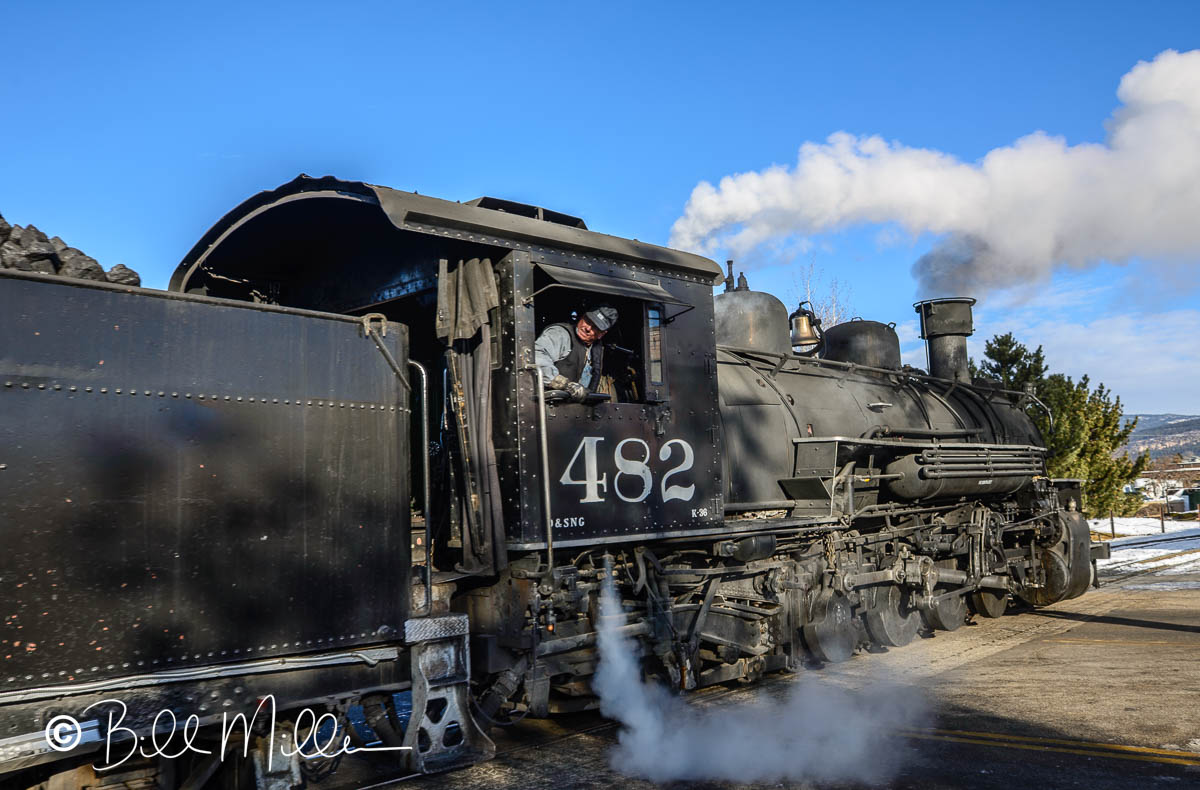
During a Typical Winter
Seven years after our summer trip together, we decided to try a winter trip . . . twice, once in 2014 and later in 2017. The first winter trip had great snow, and all but one of the following photos is from 2014.
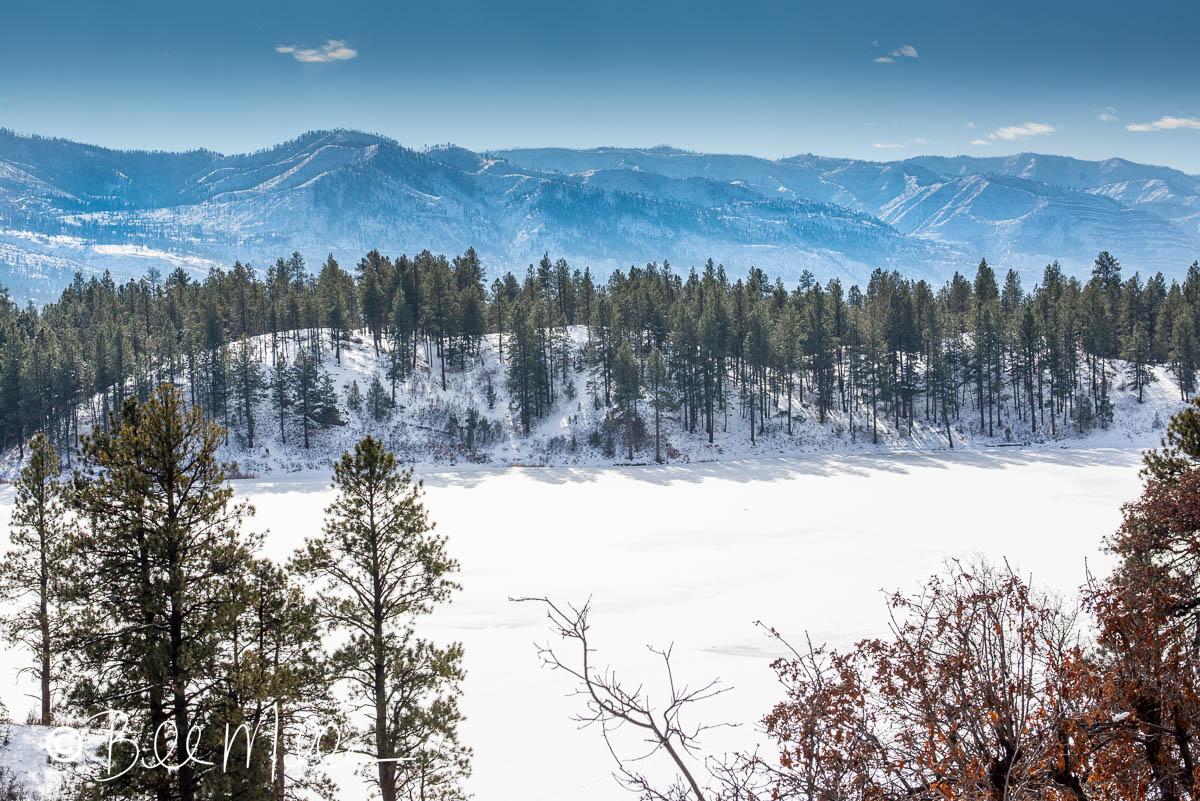
Winter Meadow
Before reaching the famous High Line section, the railroad passes through a quieter and more open section of the Animas Canyon. Broad mountain meadows stretch beside the tracks, offering sweeping views of the surrounding San Juan Mountains and a brief sense of spaciousness before the canyon walls begin to tighten. This peaceful landscape provides a beautiful contrast to the dramatic cliffs ahead, where the narrow-gauge railway climbs onto its famous shelf above the Animas River.
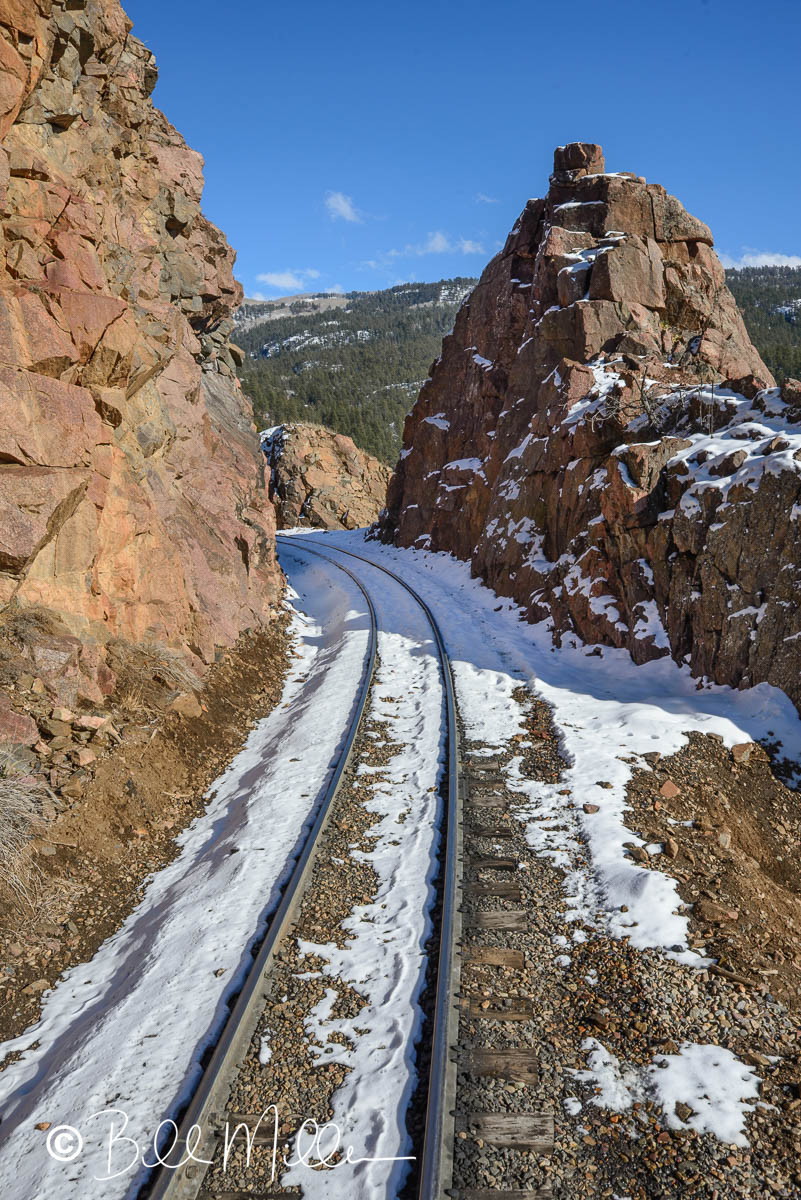
Narrow Squeeze
This is the “High Line” section (this photo and the next two) where the railroad bed was carved from the towering rocks cliffs with the Animas River flowing 400 feet below.
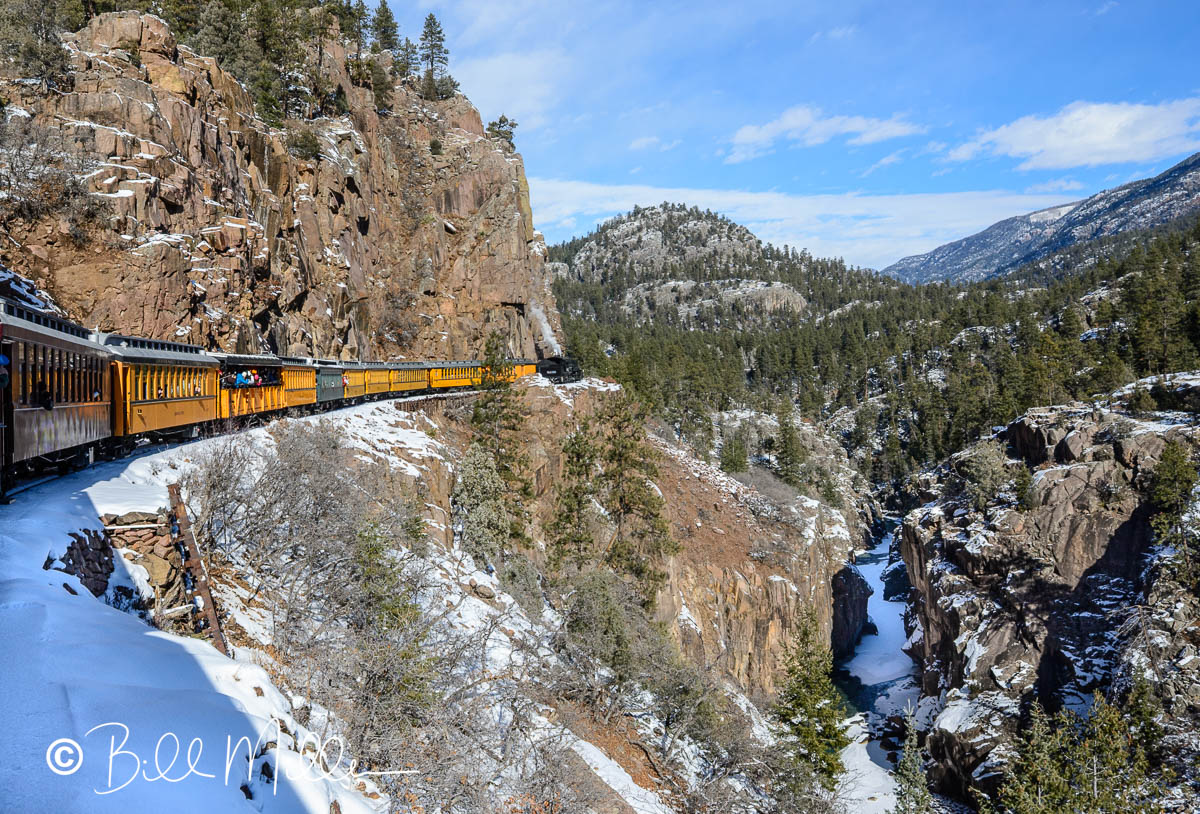
Snow & Ice-Covered Animas River
High Line section. Contrast this view with the one in the first gallery image.
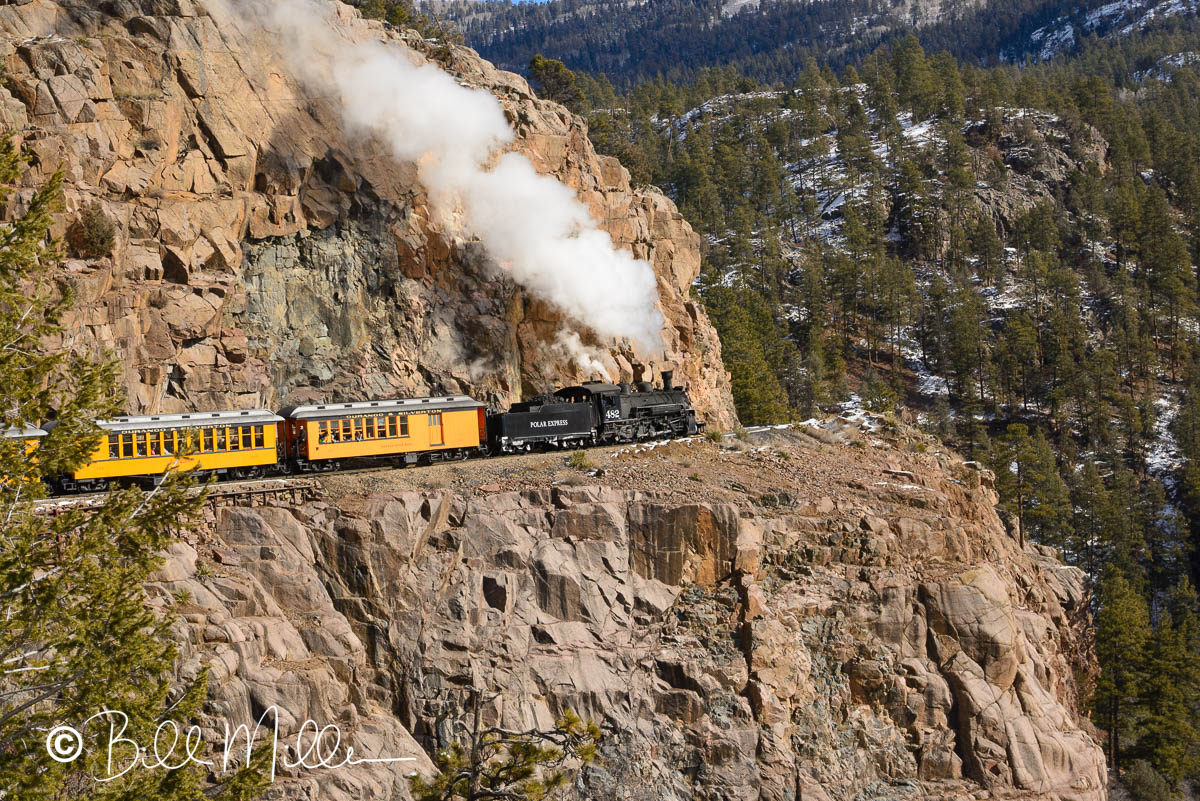
Steep Climb
A number of movies were filmed along the High Line, including Butch Cassidy and the Sundance Kid.
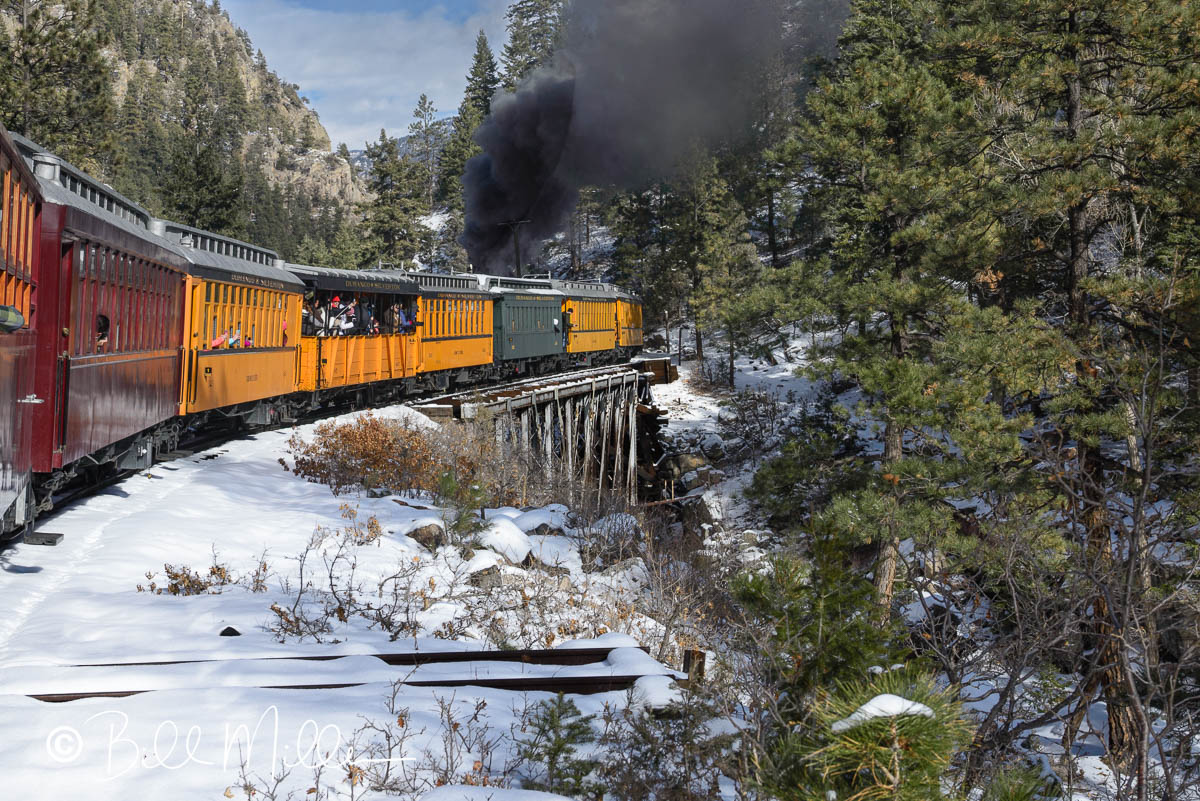
The High Bridge
One of the dramatic moments of the journey comes at the High Bridge, where the narrow-gauge railroad crosses high above the Animas River on a historic steel trestle. It is a remarkable reminder of the engineering challenge faced by the railroad builders in 1882.
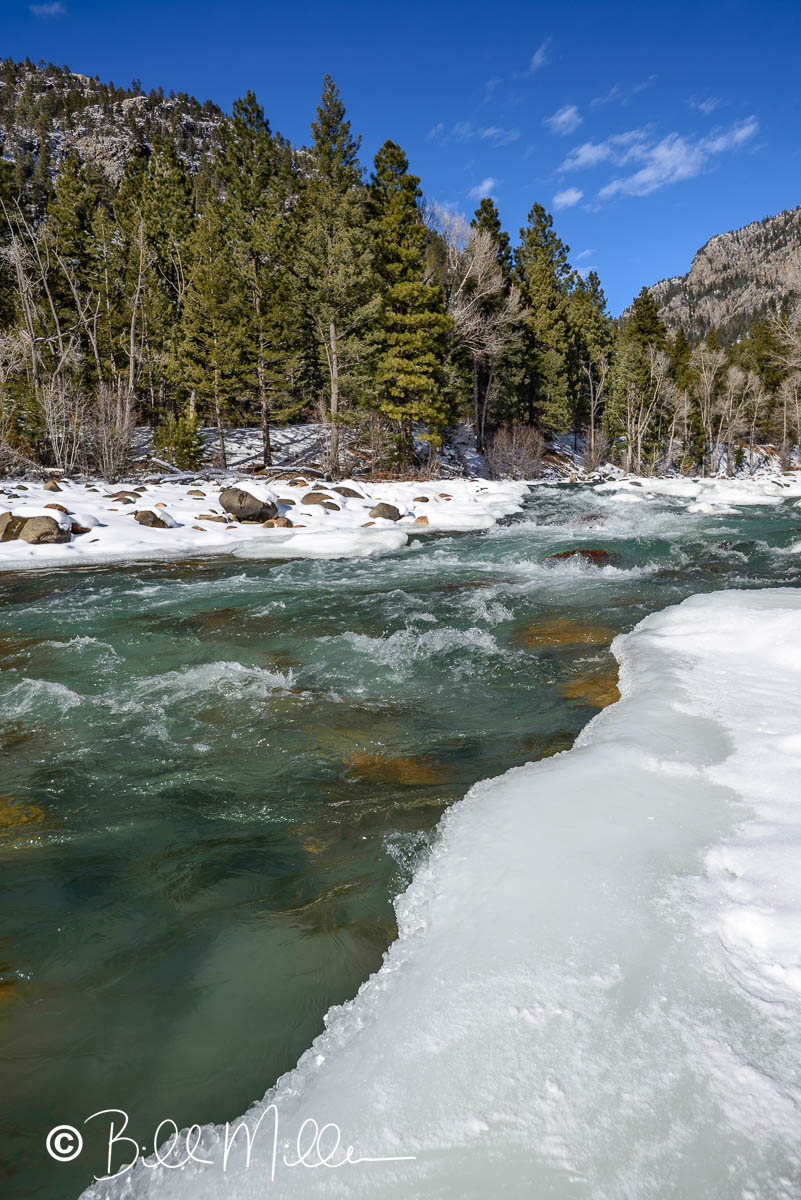
Don’t Step Too Closely
The Animas River, the constant companion of the railroad, is transformed by winter’s grip, with ice framing the river’s edges.
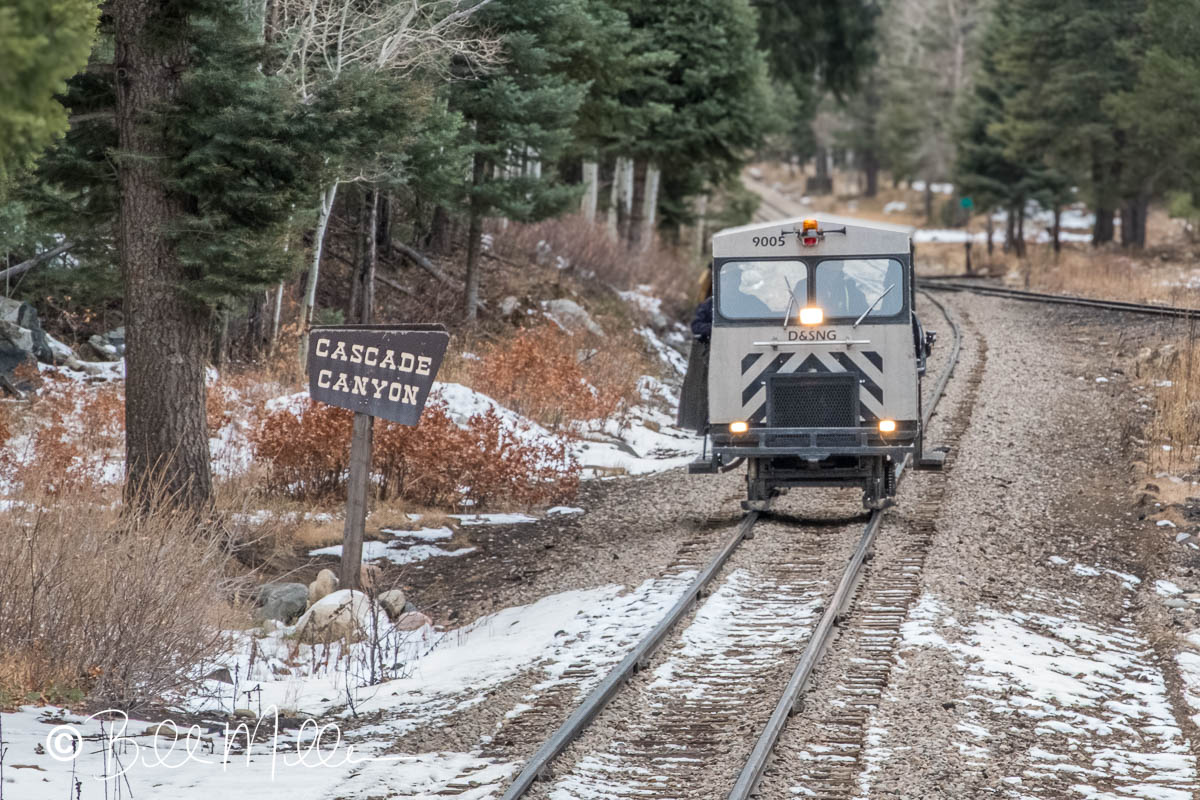
Cascade Canyon
Deep snow closes the upper portion of the line in a typical winter so, the train turns around at Cascade Canyon rather than continuing to Silverton.
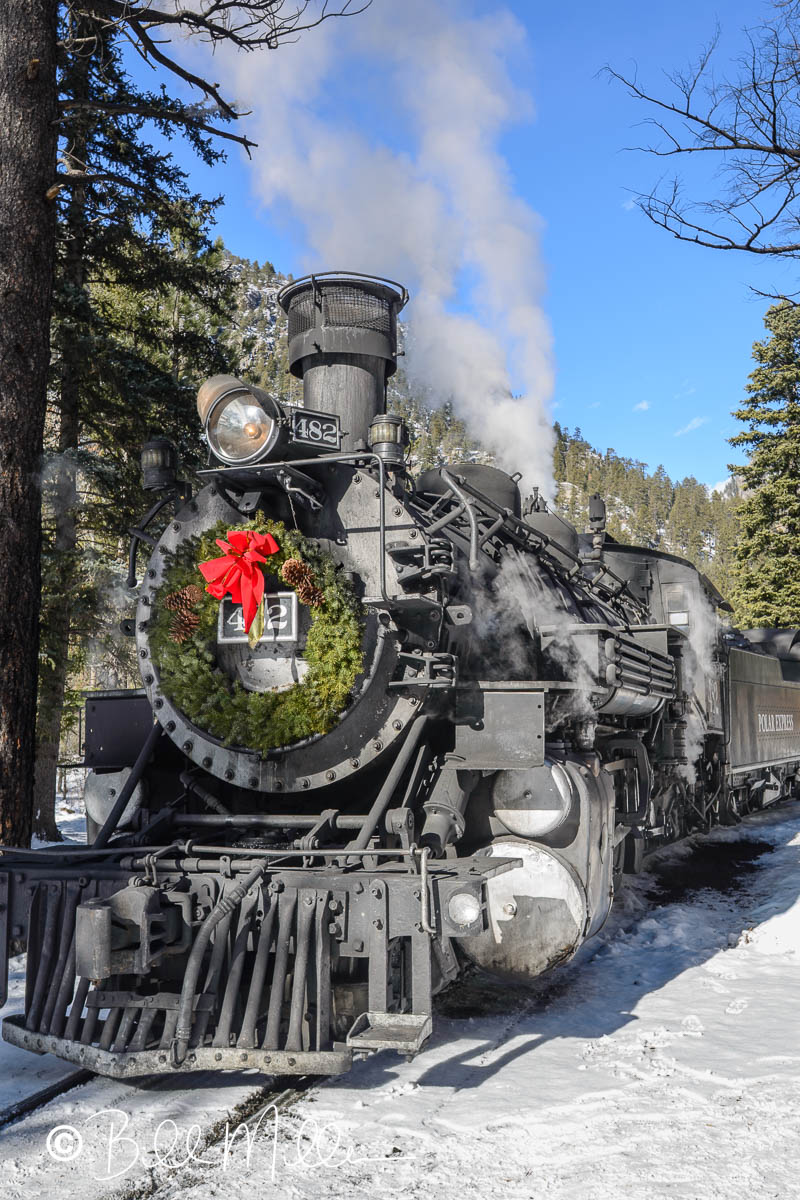
Winter Excursion
The winter excursion offers a peaceful, intimate view of the landscape, where snow-covered pines, frozen waterfalls, and the rushing Animas River create a striking contrast against the black steam locomotive and its billowing white plume.
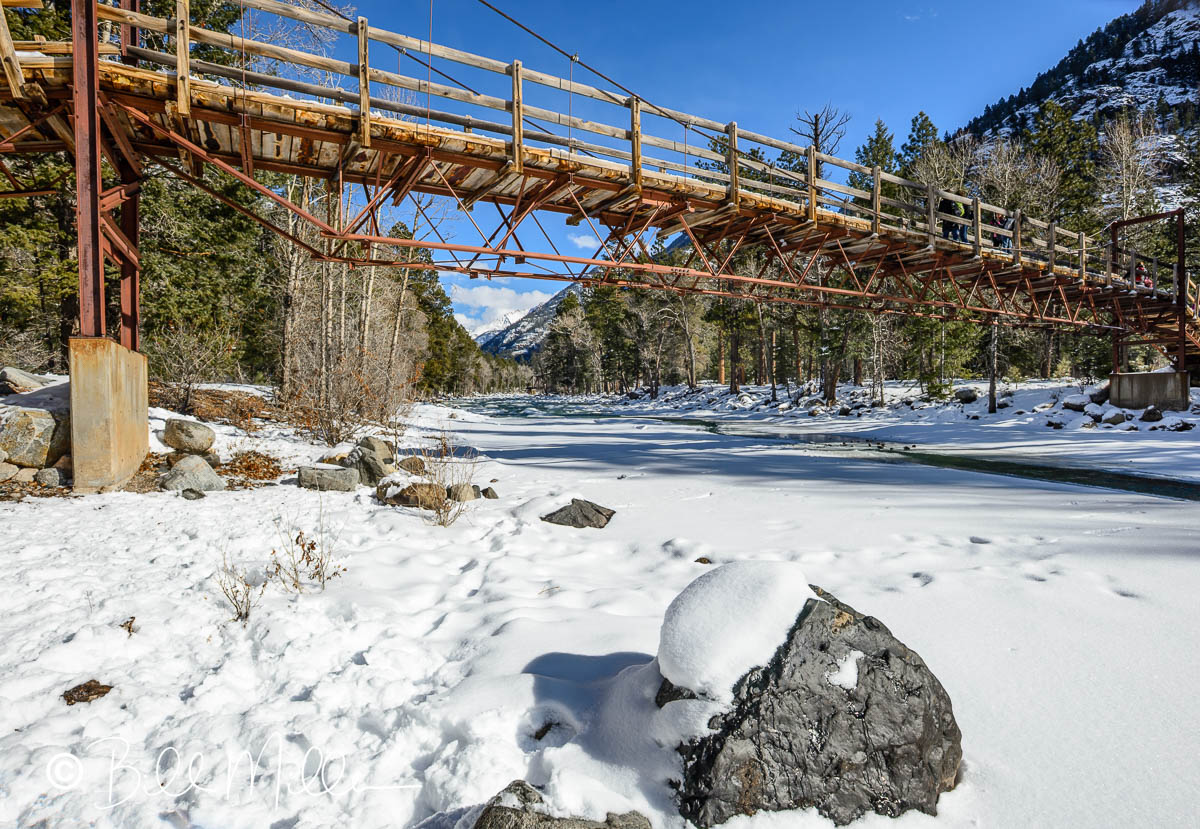
Hiking Bridge Across the Animas
Passengers have time to step off the train, warm themselves by outdoor fire pits, enjoy refreshments, and take in the crisp mountain air before the return trip to Durango. For photographers, winter provides a completely different palette—brilliant white snow, dramatic steam, and soft mountain light combine to create images that are every bit as memorable as those captured during the summer journey.
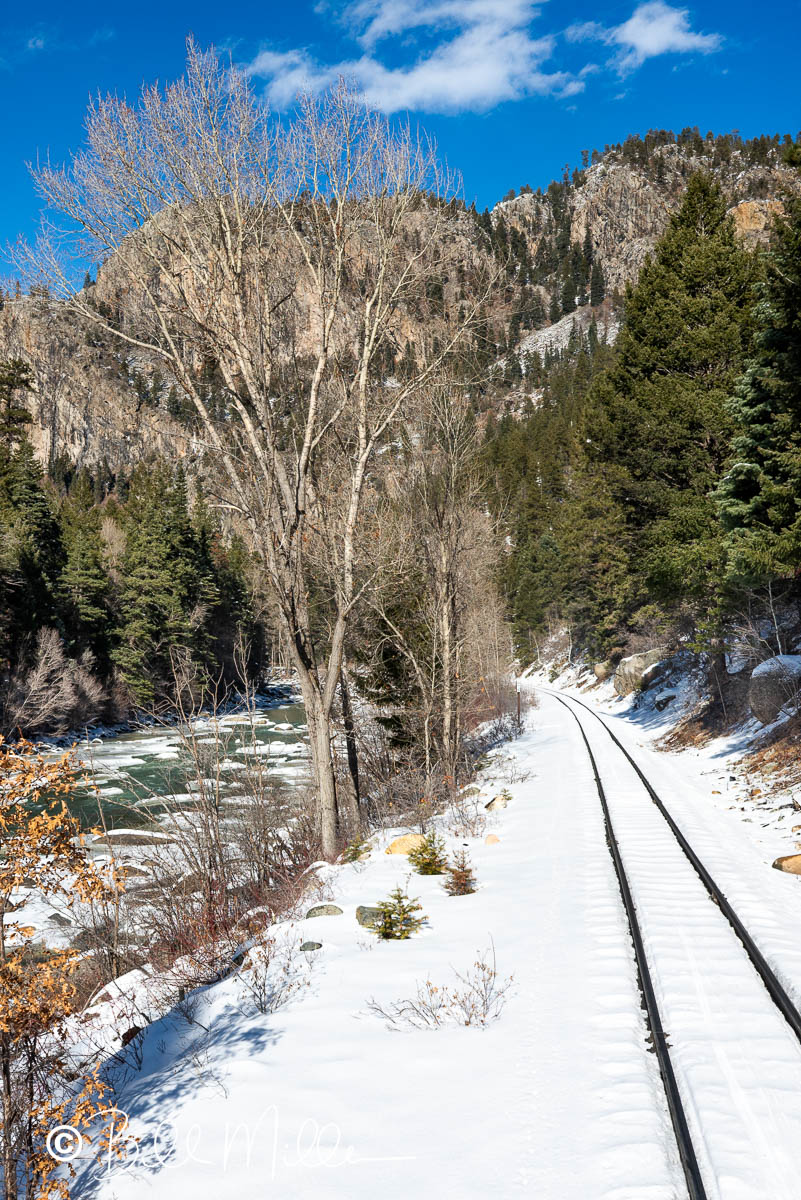
View from the Caboose
The Cascade Canyon Winter Train travels about 26 miles from Durango along the Animas River before reaching its turnaround point deep in the canyon. The approximately 4½-hour round trip replaces the summer journey to Silverton with a quieter winter experience.
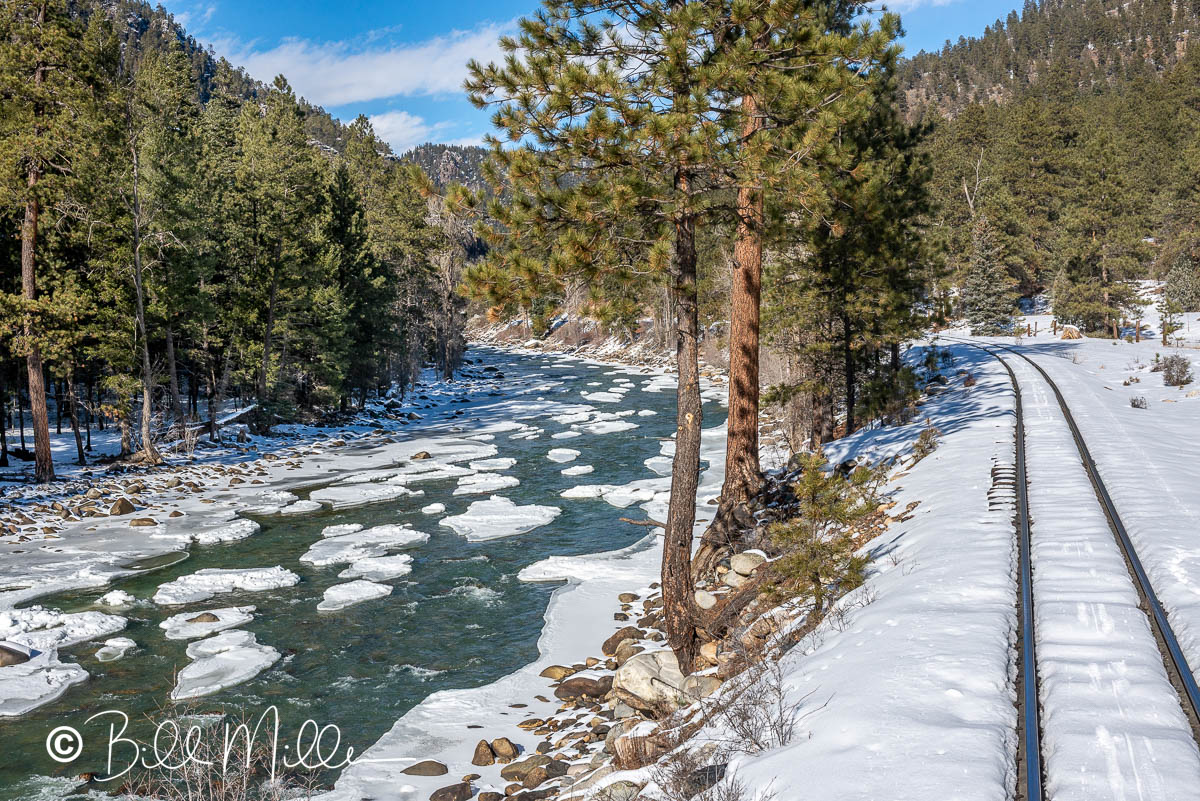
View from the Caboose #2
Of the two seasonal choices, the first winter trip was my favorite. With a wamr coat and snow boots, it was great fun to romp in the snow.
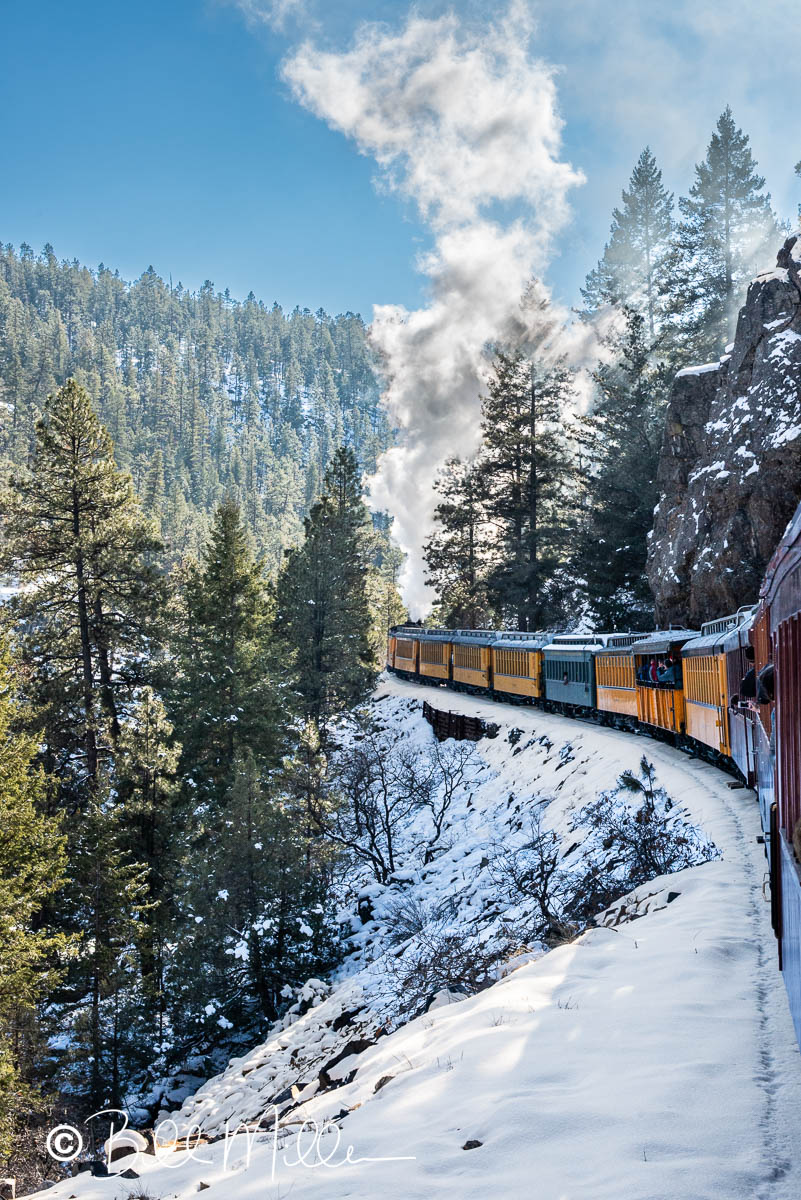
Back through the High Line Section
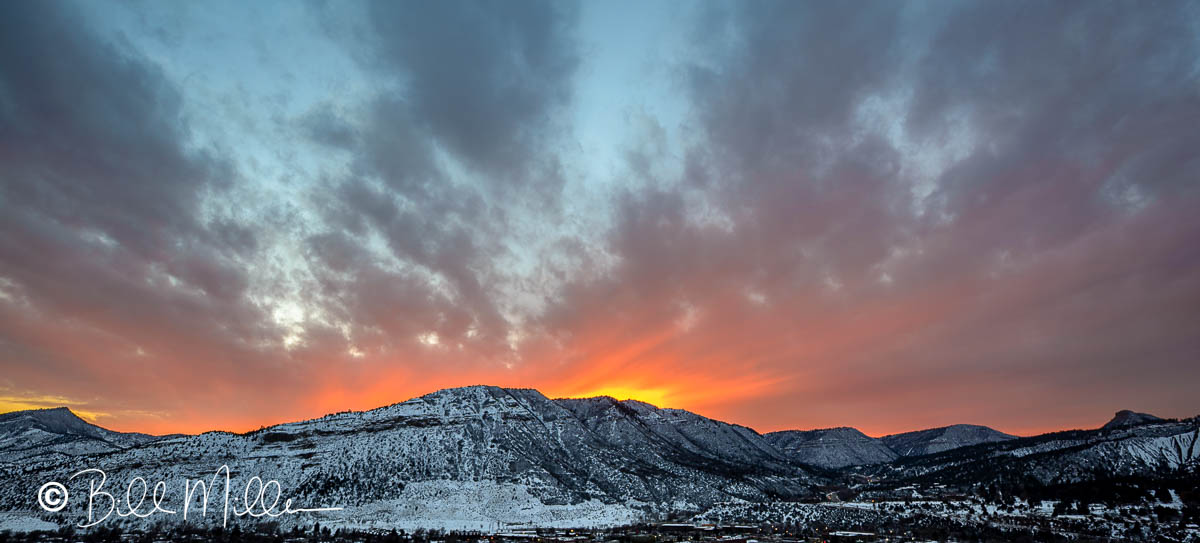
New Year’s Eve Sunset
With a shorter winter trip on one of the year’s shorest days, we were back in Durango in time to capture an incredible sunset followed by dinner.